Sustainable Bedding
Natural Latex Mattresses: A Guide to Firmness, Layers, and Certifications
A mattress is less a single object than a small landscape: a surface, a support system, a collection of materials with different jobs. Natural latex can lend that landscape buoyancy and resilience, but the words on a label do not tell the whole story. To choose well, look beneath the cover—to the layers, their arrangement, the firmness options, and the standards that help verify what is inside.
Shopping for a natural latex mattress can feel like entering a room where everyone speaks in confident abbreviations. Dunlop. Talalay. GOLS. ILD. The terminology is useful, once translated; until then, it can make a straightforward question—will this bed feel comfortable and hold up?—seem needlessly technical.
The first clarification is that “natural latex” describes a material, not a complete mattress recipe. A mattress may contain a substantial latex core, several thinner latex layers, a wool barrier, a cotton cover, or a combination of latex and pocketed coils. The overall feel depends on those components working together. A thick comfort layer over a firm support layer behaves differently from a single slab of latex, even if both products are advertised as natural.
That distinction matters for sustainability as well as comfort. A credible assessment considers where materials come from, how they are processed, what other components are present, whether relevant certifications apply, and how the finished mattress is meant to be cared for. “Organic” can be a meaningful claim, but it is not a substitute for a construction diagram or a complete materials list.
What natural latex means
Natural rubber latex begins as sap from rubber trees, most commonly Hevea brasiliensis. The sap is processed into a resilient foam used in mattresses and other products. Its springy response is one reason latex feels unlike many conventional polyurethane foams: pressure compresses the material, and it pushes back with a buoyant quality. People often describe the sensation as floating on the bed rather than sinking deeply into it, though the exact impression varies with firmness, thickness, body shape, and the rest of the mattress.
The word “natural” should be read carefully. A finished latex foam is processed, and the term alone does not establish that every ingredient or component is natural, organic, or free from particular substances. Some mattresses contain blended or synthetic latex; others pair natural latex with synthetic fibers, adhesives, or additional foams. Ask what the label refers to: the latex alone, a particular layer, or the complete product.
Two familiar manufacturing methods are Dunlop and Talalay. Dunlop latex is made by pouring latex into a mold and curing it. Talalay involves additional steps, including expansion and freezing before curing. These processes can produce foams with different characteristics, but neither name is a guarantee of a specific firmness or a universally superior mattress. Formulation, density, layer thickness, and the way a manufacturer describes its comfort options all matter.
Natural latex also should not be assumed to be suitable for everyone. People with a latex allergy should seek medical guidance and carefully review a product’s materials and handling information before considering it. A cover may enclose the latex, but that fact alone does not settle an individual’s medical question.
Firmness: a rating is not a promise
Mattress firmness is usually described in familiar terms—soft, medium, firm—but those words are not a universal measuring system. One maker’s medium may feel closer to another maker’s firm. Even a numerical rating needs context: what scale is being used, which layer was rated, and how thick is that layer?
Firmness is also not the same thing as support. Firmness is the initial sensation at the surface. Support describes how well a mattress helps keep the body comfortably aligned as it settles into the bed. A surface can feel plush while a deeper layer provides substantial support; a very firm surface can still feel wrong if it creates pressure at the shoulders or hips. The useful question is not simply “How firm is it?” but “How does this particular construction feel under my body, in my usual sleeping position?”
Sleep position offers a starting point, not a rule. Side sleepers often look for enough give at the shoulder and hip to reduce concentrated pressure, while still wanting the waist and torso supported. Back sleepers may prefer a surface that cushions the lower back without letting the body sink excessively. Stomach sleepers commonly seek a firmer, more level feel, though comfort and body proportions can change the equation. These are practical considerations, not medical prescriptions.
Weight distribution changes how a mattress responds, too. The same latex layer may compress differently for different people. Couples who share a bed may therefore want to consider split configurations, where each side can have a different comfort layer or firmness. If a mattress offers adjustment or exchange options, read the conditions closely: the trial period, fees, shipping responsibilities, and which layers can actually be changed.
When a retailer uses ILD—indentation load deflection—to describe latex firmness, treat the number as one piece of information rather than a direct translation into “soft” or “firm.” ILD measures resistance to indentation under specified test conditions. Comparisons are most useful when products have been measured in comparable ways; the number by itself does not describe the complete mattress or predict how every sleeper will experience it.
Layers: the mattress as a system
A latex mattress may be constructed from one continuous core or several layers stacked beneath a quilted cover. Each layer can play a different role. A thinner, softer upper layer may provide initial cushioning and pressure relief. A firmer, deeper layer may limit how far the body sinks and help create a stable sleeping surface. In a hybrid, pocketed coils can form the support system, with latex above them supplying a responsive comfort layer.
Thickness is important, but it does not tell the whole story. A thicker mattress is not automatically more supportive or more durable. The firmness and density of each layer, the quality of its construction, the sleeper’s body, and the foundation beneath the mattress all contribute. A six-inch latex core, for example, is a different proposition from several inches of latex over a substantial coil unit. A detailed layer diagram is more informative than a single headline figure for mattress height.
Some designs place wool between latex and the cover. Wool can add a layer of cushioning and serve as part of a mattress’s flame-resistance strategy, depending on the construction and applicable requirements. Cotton is often used for the cover or quilted casing. Neither material is interchangeable with latex: each has its own function, sourcing questions, and care needs. Ask whether a stated certification applies to the wool, cotton, latex, or complete finished product.
Layered, zippered designs offer a particular advantage: components may be inspected, rearranged, or replaced, depending on the manufacturer’s instructions and warranty. Some models allow the comfort level to be changed after purchase, and split configurations can allow partners to choose different feels on each side. The trade-off is that customization can make the buying decision more complicated. Before ordering, confirm what the options mean in practice, whether layers can be swapped later, and what those changes cost.
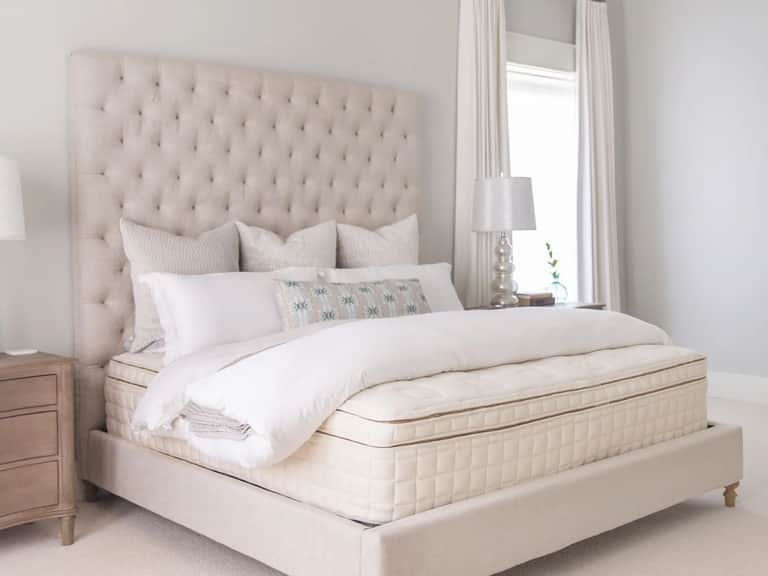
One example of a layered latex design is the Naturepedic EOS Pillowtop Organic Hybrid Mattress. Its listed construction includes pocketed coils, customizable Dunlop latex comfort layers, and a separate latex pillowtop, along with cotton and wool components. The maker describes options for adjusting the feel, including different configurations for each side on certain sizes. Those details make it a useful illustration of how a mattress can combine latex with other materials; they are not a substitute for checking the current specifications, size availability, warranty, and care guidance for any mattress under consideration.
Certifications: what the letters can—and cannot—say
Certifications can help make a complicated supply chain more legible. They are most useful when the shopper understands which material or process a standard covers. A label on a mattress is not necessarily a blanket certification of every component, and one standard should not be treated as proof of claims outside its scope.
GOLS, the Global Organic Latex Standard, is associated with organic latex and requirements concerning its processing and chain of custody. When evaluating a mattress, check whether the certificate applies to the latex used in the product and whether the manufacturer can identify the certified material. A claim that a mattress is “made with organic latex” is narrower than a claim that every component is organic.
GOTS, the Global Organic Textile Standard, concerns organic fibers and textile processing. It can be relevant to cotton or wool components, but a GOTS mark on fabric does not certify a latex core. Confirm which textile component is covered and look for the certificate details rather than relying on a general phrase such as “organic mattress.”
OEKO-TEX Standard 100 is a textile testing label that addresses specified harmful substances in tested articles. It is not the same as an organic certification, and it does not establish that a material was grown organically. Likewise, claims about emissions or indoor air quality should be linked to the particular standard or testing program that supports them. A certification’s name, scope, and certificate holder all matter.
For a careful comparison, look for a current certificate or a verifiable certification number, and note whether it belongs to the manufacturer, a material supplier, or the finished product. If a seller uses a logo without explaining what it covers, ask. A transparent answer should identify the component, the standard, and the relevant documentation without implying that one credential settles every question about health, environmental impact, or working conditions.
Reading environmental claims with care
Natural materials can be appealing, but “natural” is not a synonym for impact-free. Rubber cultivation, textile production, transport, processing, and product lifespan all shape a mattress’s environmental footprint. A persuasive sustainability case is therefore specific: it identifies materials and origins where possible, describes processing, and avoids claiming that one adjective answers every question.
Durability matters. A mattress that remains comfortable and usable for many years may avoid earlier replacement, although no label can guarantee a precise lifespan for every household. Ask about the warranty and what it actually covers. A warranty may address defects or specified changes in the mattress, while excluding normal wear, comfort preferences, or damage caused by an unsuitable base. A long warranty is not, by itself, proof that a mattress will suit a particular sleeper.
It is also worth asking what happens when the mattress reaches the end of its useful life. Can layers be replaced separately? Does the maker provide repair guidance or take-back options? Are materials easy to identify and separate? These questions may not determine today’s comfort, but they help distinguish a product designed for maintenance from one whose components disappear behind an opaque cover.
Care and the foundation beneath it
Natural latex mattresses are not necessarily low-maintenance in every respect. Care instructions vary with the cover and construction. Some covers are removable; others are not intended to be taken off. Removing a cover without permission can damage the mattress or affect warranty coverage. A protective mattress pad can help limit spills and routine soiling, but it should be selected with attention to breathability and the manufacturer’s guidance.
Keep latex away from avoidable moisture and follow the maker’s instructions for cleaning. Do not assume that a foam core can be washed or treated with household cleaners. If the cover is washable, follow its specified temperature and drying method. If the mattress arrives compressed or boxed, observe the recommended expansion period and ventilation instructions before use.
The base matters more than it may appear. A mattress needs a compatible, adequately supportive foundation; widely spaced or unsuitable slats can affect how it performs and may compromise warranty terms. Check the manufacturer’s requirements for slat spacing, platform support, or an adjustable base. Rotate the mattress only if the instructions allow it—many layered designs are not meant to be flipped, and some mattresses have a defined top and bottom.
A practical comparison checklist
Before choosing among natural latex mattresses, gather the same basic information for each model. This turns an assortment of marketing language into a comparison that can be checked, discussed, and revisited.
- Materials: Is the latex natural, blended, or synthetic? What are the cover, quilting, and other layers made from?
- Construction: How many layers are present, how thick are they, and what does each one do?
- Feel: Which layer determines the comfort level? Are firmness terms or measurements explained?
- Certifications: Which standard applies to which component, and can the documentation be verified?
- Adjustability: Can layers be changed, and what are the limits, charges, or return conditions?
- Support system: Is the mattress all-latex or a hybrid with coils? What foundation does the manufacturer require?
- Care: Is the cover removable? What cleaning methods are permitted?
- Terms: What do the trial, warranty, delivery, and return policies actually cover?
- End of use: Can individual components be repaired, replaced, or otherwise managed separately?
If possible, test a comparable construction in person and spend enough time in your usual sleeping position to notice pressure and alignment. A brief showroom visit cannot reproduce several nights at home, but it may help identify whether you prefer latex’s responsive pushback to a slower, more enveloping surface. Where an in-home trial is available, read its conditions before purchase rather than after discomfort appears.
Making a choice without chasing the perfect label
The best natural latex mattress is not necessarily the one with the longest list of certifications, the greatest number of layers, or the most elaborate vocabulary. It is the one whose construction matches the sleeper’s comfort needs, whose materials are described clearly, and whose claims can be checked. A thoughtful buyer can hold two ideas at once: a certification is useful evidence, and it is only evidence about a defined part of the product.
Begin with the feel you need. Consider sleeping position, pressure at the shoulders and hips, and whether you share the bed with someone who prefers a different level of firmness. Then examine the layer plan and determine where the mattress gets its cushioning and where it gets its deeper support. Finally, verify the sourcing and certification claims, read the care instructions, and check the foundation and return terms.
Latex’s appeal lies partly in its material character: resilient, buoyant, and capable of being arranged in different ways. Its limits are equally ordinary. No material can prescribe comfort for every body, and no label can replace a clear account of construction. A mattress becomes easier to understand when it is treated not as a promise printed on a tag but as a system of materials, each with a job, a history, and a set of conditions under which it can serve well.